
Harvesting “Tumbleweed”
Tumbleweed is staple across many of the plains states. You often see them in Western movies depicting the harsh, dry conditions of the earth when the sun is hot and water is scarce; however, "harvesting tumbleweed” is something rarely discussed.
Let's start with what we know about tumbleweed, other than it tumbles along the ground. Many may think that these rolling masses are just that— rolling masses with no particular purpose. On the contrary, tumbleweeds are actual plants that have roots. These masses ride the wind until, when conditions are right, their roots shallowly penetrate the soil to snatch up any water it can reach before the wind catches them and persuades them to mosey along to the next watering hole which really is just another seemingly dry spot on the ground.
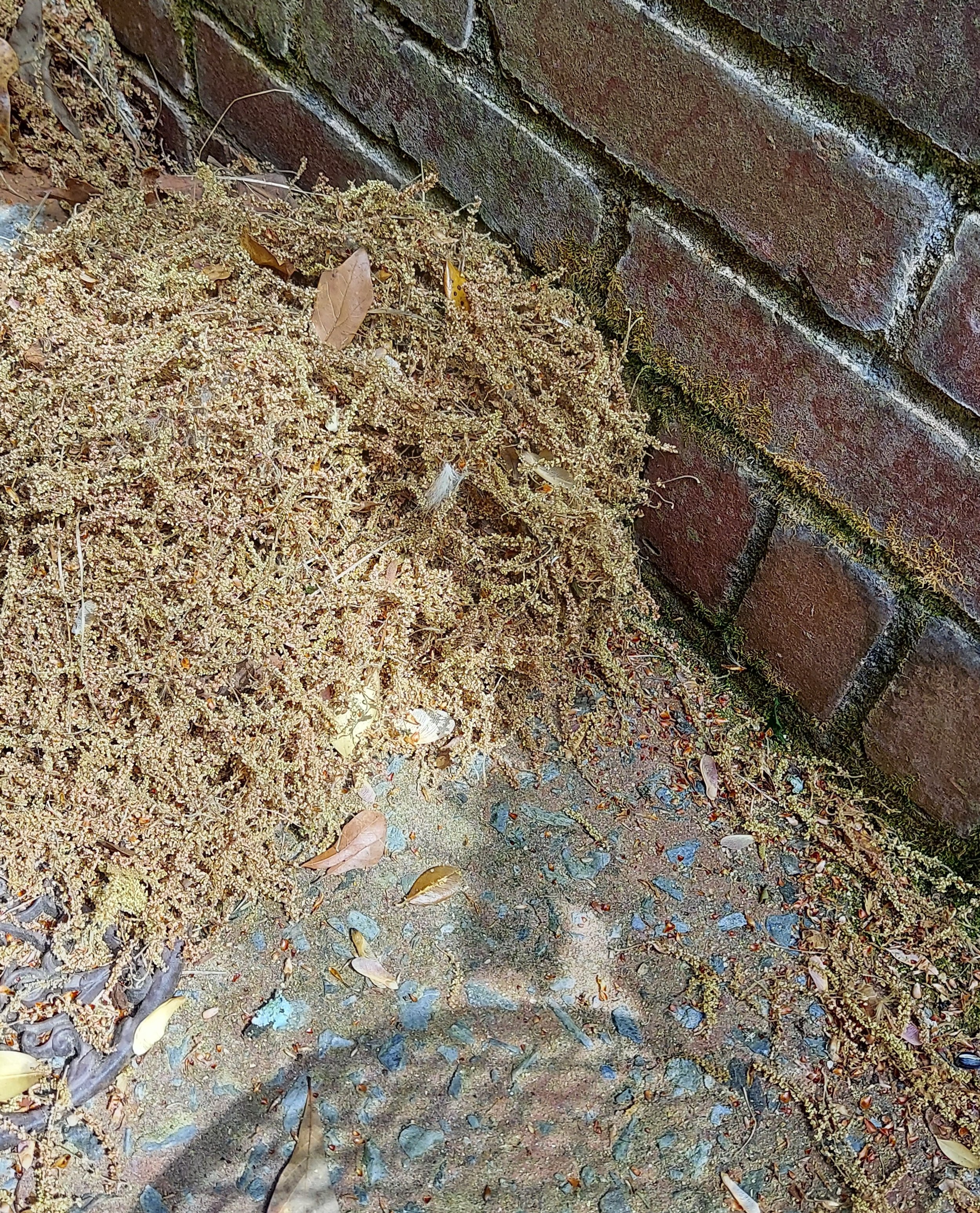
In North Carolina, we have what my husband John lovingly refers to as "Eastern Tumbleweed". Over most of the state, its spring precursor appears as a yellow dust that coats anything left outside the open doors. Following the sprinkled, golden hue, the towering oak trees begin to form pollen fronds. Depending where you live and the types of trees around you, your own area may display billions of these caterpillar-like nemeses each spring. When the time comes, and over the course of a fortnight, they drop to the ground disguising driveways and gardens rendering them as almost unrecognizable entities. In our own self-defense, they only thing left for us to do is "harvest" them before the spring rains plaster them together. So, don a mask and cue the leaf blower-- it's harvest time.
"Eastern Tumbleweed" got its name for how it resembles its Western legend congregating into piles as the leaf blower, somewhat aggressively, urges it along its path. Let's say it gently rolls along the ground with each gust like true tumbleweeds do. With each pass of the blower, these tumbling masses are coaxed to their next destination, preferably somewhere else.
If you are lucky enough to corner one, you can "harvest" it for removal. Wash, rinse, repeat until gone. Never to worry, there will be more next spring. If you want to propagate your own— plant oaks.
Wonderfully yours,
